EU Certified Small Tracked Machines: A Handbook to Compliance
EU Certified Small Tracked Machines: A Handbook to Compliance
Blog Article
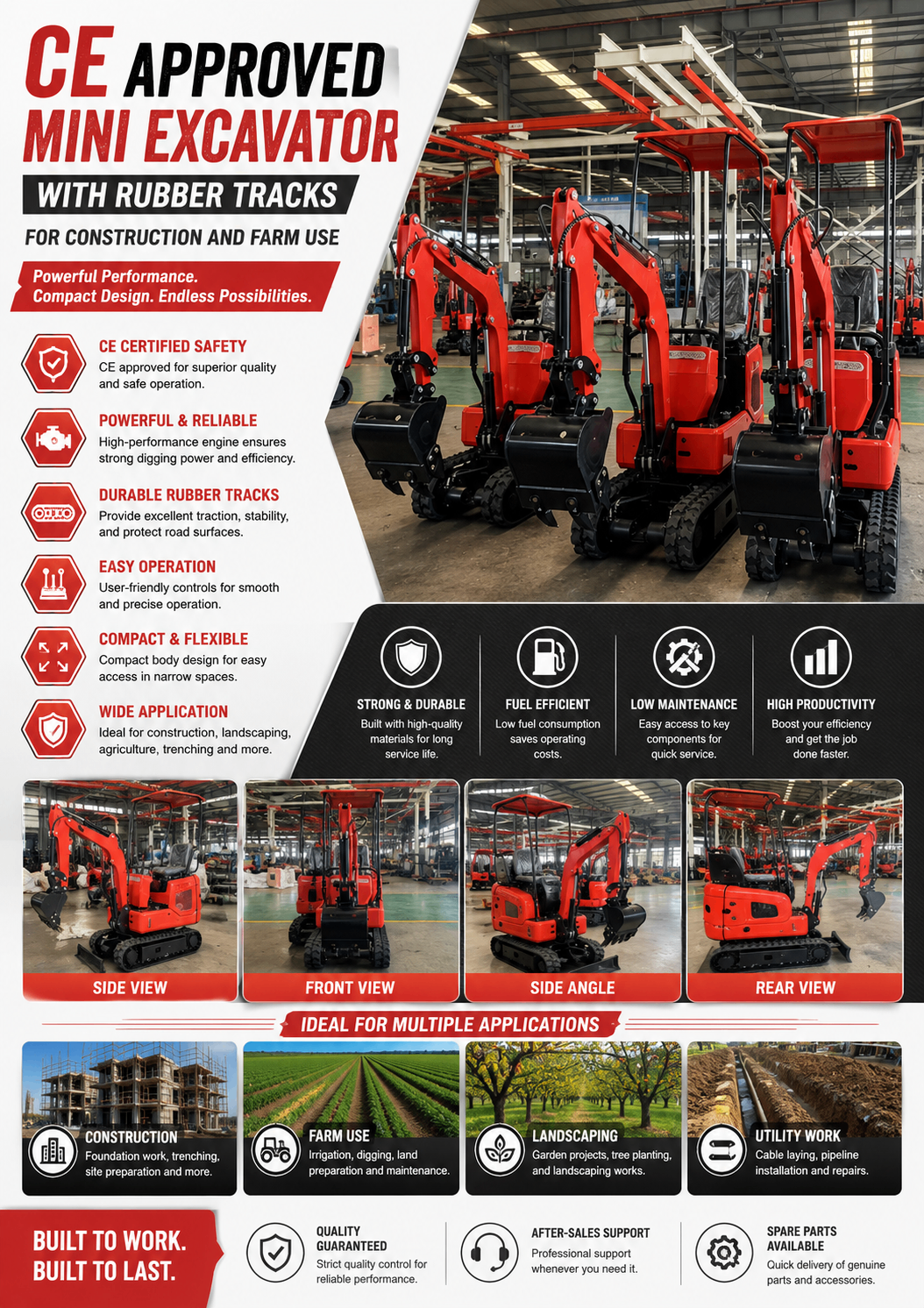
Ensuring your small digger meets European certification requirements is essential for operation within the EU. This overview details the necessary aspects of EU certification for mini tracked machines, such as regulations related to security, construction equipment testing, and paperwork. Understanding the specifications permits operators to legally use their vehicles and prevent potential legal action.
Steel Track Mini Machines: Superior Pull for Tough Ground
Mini machines equipped with composite tracks are revolutionizing how contractors handle projects in rough conditions. Unlike traditional tire-equipped models, these versatile machines provide exceptional traction on unstable surfaces like mud, ice, and steep grades. This greater stability allows operators to finish tasks effectively and quickly, lessening downtime and maximizing output. The compliant nature of steel tracks also reduces ground impact, preserving delicate surfaces and minimizing ecological damage.
Mini Diggers: Significant Performance in Limited Building Sites
These robust reduced-size excavators deliver a remarkable approach for projects where conventional equipment easily operate. Their reduced footprint allows access to difficult areas, like confined infrastructure or among established structures. Despite their size, they boast impressive digging force Mini excavator for farm use and precision, making them perfect for a varied range of construction uses. Ultimately, small excavators embody a smart investment for builders facing the difficulties of restricted job-sites.
Mini Machines for Agricultural Land : Adaptability and Efficiency in Farming Tasks
Modern agriculture operations often require tools that can handle a variety of demanding jobs. Small machines are quickly becoming invaluable assets for growers , offering exceptional adaptability and productivity across a diverse array of farming tasks . From trenching for irrigation setups and drainage to shifting earth for creating fences or platforms, these devices provide a powerful solution. They furthermore excel at clearing land for cultivation, grading land, and managing materials with ease . Their small dimensions allows them to function in limited areas that larger tractors simply cannot access .
- Trenching for Irrigation
- Relocating Soil
- Clearing Land for Planting
Determining the Appropriate Mini Digger in Building vs. Rural Uses
When considering a mini machine, it's essential to recognize the significant differences between building projects and rural operations . Building sites often necessitate increased strength , precision , and the capability to function in small locations. Consequently , a powerful model with a wide range of implements might be best . In contrast , agricultural land frequently involve reduced digging depths , routine landscape grading , and the need for maneuverable equipment to navigate open areas. Finally , thorough assessment of the intended workload is paramount for securing the suitable choice .
- Consider trenching depths .
- Determine the location limitations .
- Evaluate the necessary tools .
- Consider transportation difficulties .
{CE Labeling & Mini Diggers : What You Need to Be Aware Of
Ensuring your {mini compact machine is meets the requirements of relevant European regulations is crucial, and that's where {CE certification comes with. This identification demonstrates that the equipment has been assessed and meets safety requirements, allowing legal use within the European Economic Area . {For hirers of these machines, understanding CE certification is vital . It isn't simply about having a label on the excavator ; it represents a process of manufacturing and functionality.
- Ensure the presence of the CE identification.
- Consult the conformity document – this details the requirements the excavator meets.
- Bear in mind that CE marking is the supplier's responsibility – though users must be cognizant of its significance.